How to Choose the Right Golf Training Aid for Your Game
Golf training aids can be incredibly useful.
They can also be incredibly confusing.
There are tools for swing path, tempo, putting, grip, contact, rotation, alignment, speed, chipping, wrist position, and almost everything else in the game.
The problem is not that golfers have too few options. The problem is that most golfers buy training aids without knowing exactly what problem they are trying to solve.
That is how equipment ends up unused.
The better approach is to start with the issue in your game, then choose the training aid that gives you the clearest feedback for that issue.
Start With the Problem, Not the Product
Before buying a golf training aid, ask yourself one question:
If your answer is “my swing,” that is too broad.
A better answer would be:
- I want better alignment.
- I want more consistent contact.
- I want to stop rushing my downswing.
- I want to start putts on line.
- I want to improve my chipping strike.
- I want a better sense of swing path.
- I want to practice more consistently at home.
The more specific the problem, the easier it is to choose the right tool.
Training aids work best when they help you isolate one skill and repeat it.
If You Struggle With Aim: Use Alignment Tools
Many golfers think they have a swing problem when they actually have an alignment problem.
If your feet, shoulders, hips, and clubface are not aimed consistently, your swing has to compensate.
That can create pushes, pulls, slices, hooks, and inconsistent contact.
For alignment issues, start with alignment sticks. They are simple, affordable, and useful for almost every level of golfer.
You can use them to check:
- Target line
- Foot alignment
- Shoulder alignment
- Ball position
- Swing path
- Putting setup
Alignment tools are a good first purchase because they make every other type of practice more reliable.
If You Struggle With Contact: Use Impact Feedback
Poor contact is one of the most common amateur golf problems.
Thin shots, fat shots, topped shots, and weak strikes often come from poor low-point control or a weak impact position.
For contact issues, look for training aids that give feedback around impact.
That could include an impact bag, strike mat, contact board, or low-point trainer.
These tools help you understand where the club is meeting the ground and how your hands, body, and clubface are arriving at the ball.
Contact training aids are especially useful because they give physical feedback. You do not have to guess whether you made a better move. You can feel it.
If You Struggle With Tempo: Use a Rhythm Trainer
Some golfers have decent mechanics but poor rhythm.
They rush the backswing, lunge from the top, or swing harder than they can control. The result is usually poor balance and inconsistent contact.
A tempo trainer helps you feel a smoother swing sequence.
This type of tool is not about forcing one perfect swing. It is about helping you create rhythm, balance, and timing.
Tempo trainers are useful for golfers who feel like their range swing and course swing are completely different. When pressure goes up, tempo often gets faster. Training rhythm can help stabilize the motion.
If You Struggle With Putting: Use Face and Start Line Feedback
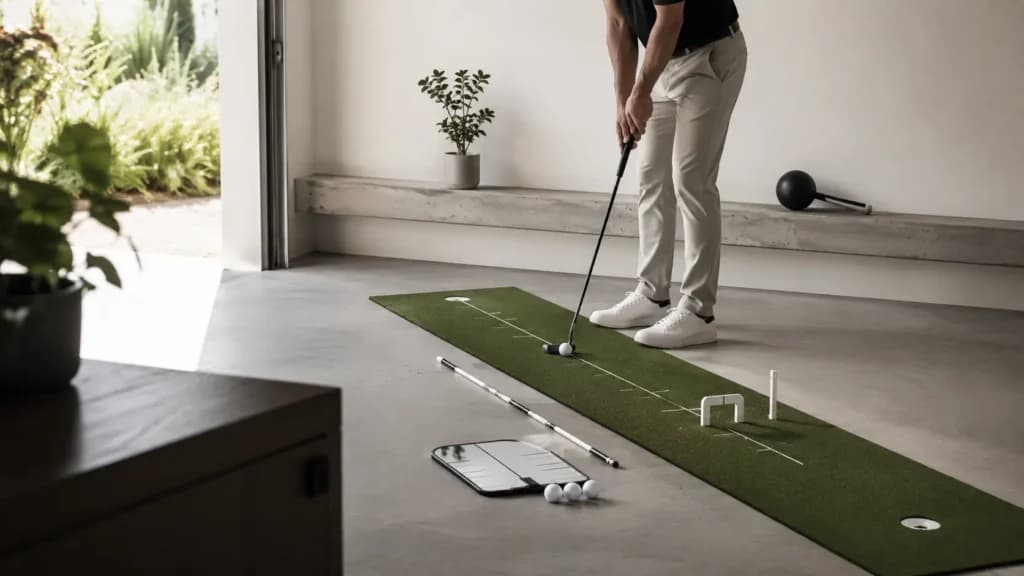
Putting training aids should help with two things: setup and start line.
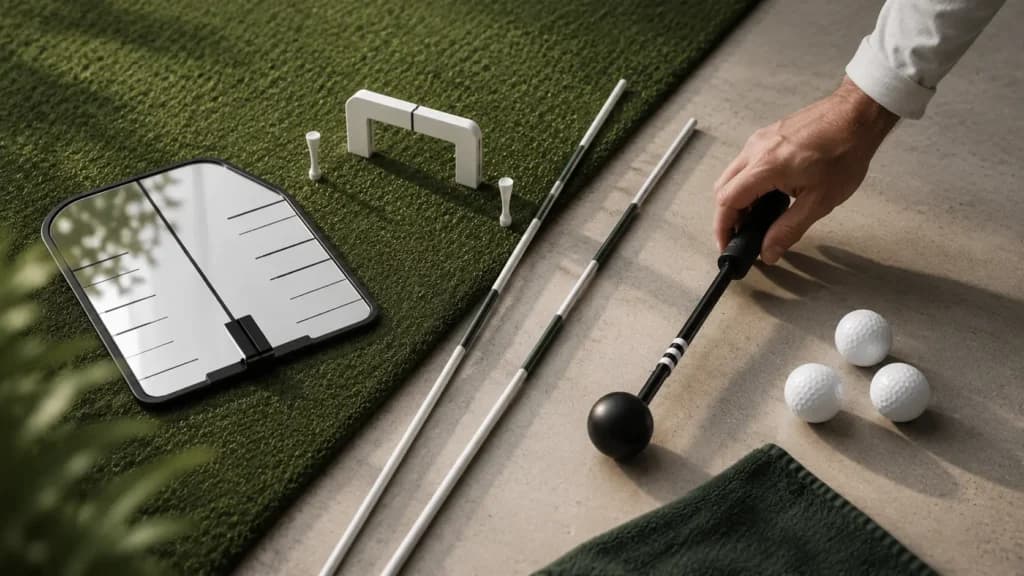
A putting mirror helps with setup. It shows whether your eyes, shoulders, and putter face are positioned consistently.
A putting gate helps with start line. It tells you whether the ball is rolling where you intended.
Both tools are useful because putting is highly sensitive to small errors. A putter face that is slightly open or closed can miss the target even with a decent stroke.
If you are trying to improve putting at home, start with a mirror and a gate before buying anything more complicated.
If You Struggle With Chipping: Use Contact and Landing Spot Tools
Chipping problems usually come from poor contact, poor setup, or poor distance control.
A chipping net can help, but only if you use it correctly.
Do not just hit balls into the net and call it practice. Instead, focus on landing spots, trajectory, and strike quality.
Helpful short-game training aids include:
- Chipping nets
- Landing targets
- Practice balls
- Strike mats
- Towels for low-point feedback
The goal is to improve control, not just make contact.
For beginners, chipping practice should be simple: consistent setup, clean strike, predictable landing spot.
If You Struggle With Practice Consistency: Choose Simple Tools
Sometimes the best training aid is the one you will actually use.
If you want to practice more often at home, choose tools that are easy to set up and easy to store.
A putting mat, mirror, alignment sticks, and a few practice balls can create a simple home practice station.
The more friction a training aid creates, the less likely you are to use it.
For most recreational golfers, simple and repeatable beats complex and impressive.
Avoid Training Aids That Try to Fix Everything
Be careful with any product that promises to fix your entire golf swing.
Golf improvement is usually more specific than that.
A good training aid should have a clear purpose. It should help with a defined skill, movement, or checkpoint.
For example:
- Alignment sticks help with aim and setup.
- A putting mirror helps with eye and shoulder position.
- A putting gate helps with start line.
- A tempo trainer helps with rhythm.
- An impact bag helps with impact position.
- A strike mat helps with contact feedback.
That clarity is what makes a tool useful.
How to Build a Simple Training Aid System
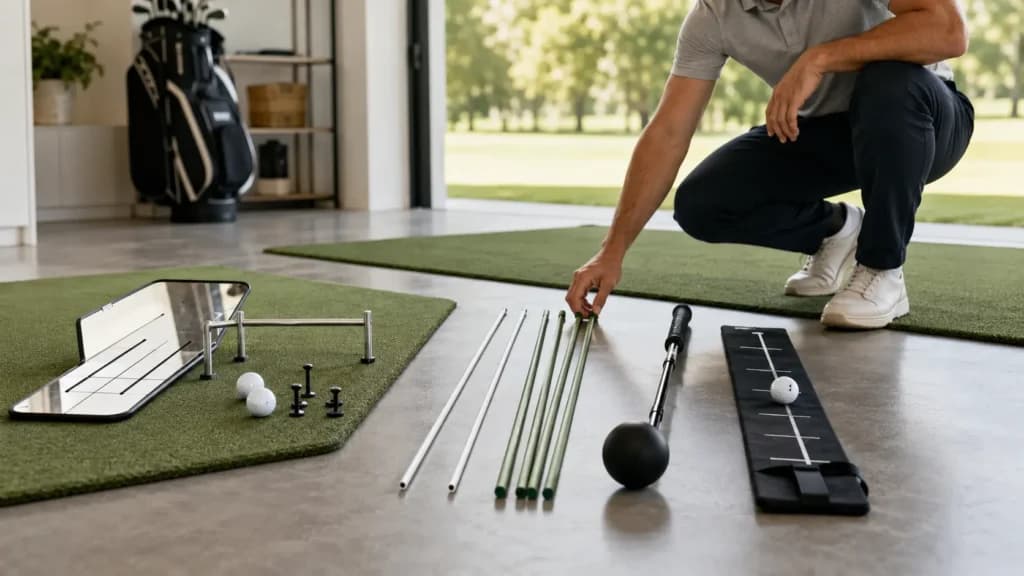
Instead of buying random tools, think in terms of a practice system.
A strong basic system includes one tool for each major area:
- Setup and alignment
- alignment sticks
- Putting setup
- putting mirror
- Putting start line
- putting gate
- Swing rhythm
- tempo trainer
- Contact
- impact or strike feedback tool
- Short game
- chipping target or landing spot aid
This gives you coverage across the game without overwhelming your practice routine.
As your game improves, you can add more specific tools based on your needs.
Final Thoughts
The right golf training aid is not the one with the boldest promise.
It is the one that helps you solve a specific problem.
Start by identifying what you want to improve. Then choose a tool that gives clear feedback, fits your practice environment, and helps you repeat a better habit.
Golf training aids are not magic fixes. But when used correctly, they can make practice more focused, more measurable, and more effective.
That is where real improvement starts.