Home Practice Drills That Actually Improve Your Game
You do not need a full simulator, launch monitor, or backyard putting green to practice golf at home.
Those things can help, but they are not required.
The real goal of home golf practice is simple: build better habits between rounds.
You can work on setup, tempo, putting stroke, face control, chipping contact, and mobility from a small space. The key is knowing what to practice and how to keep it focused.
Golf practice at home should not feel random. It should give you a repeatable way to improve the parts of your game that do not require a full driving range.
What Can You Actually Improve at Home?
Home practice is best for skills that depend on repetition and feedback.
That includes:
- Putting setup
- Putter face control
- Stroke path
- Alignment
- Swing tempo
- Takeaway
- Impact position
- Chipping contact
- Balance
Home practice is not ideal for judging full ball flight unless you have enough space and the right equipment. But you can still improve the movements that influence ball flight.
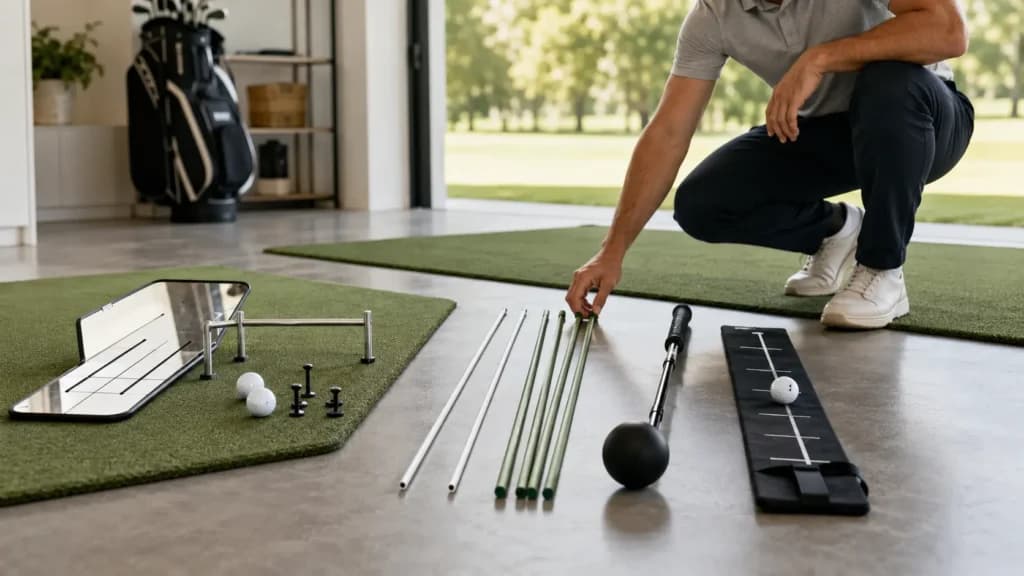
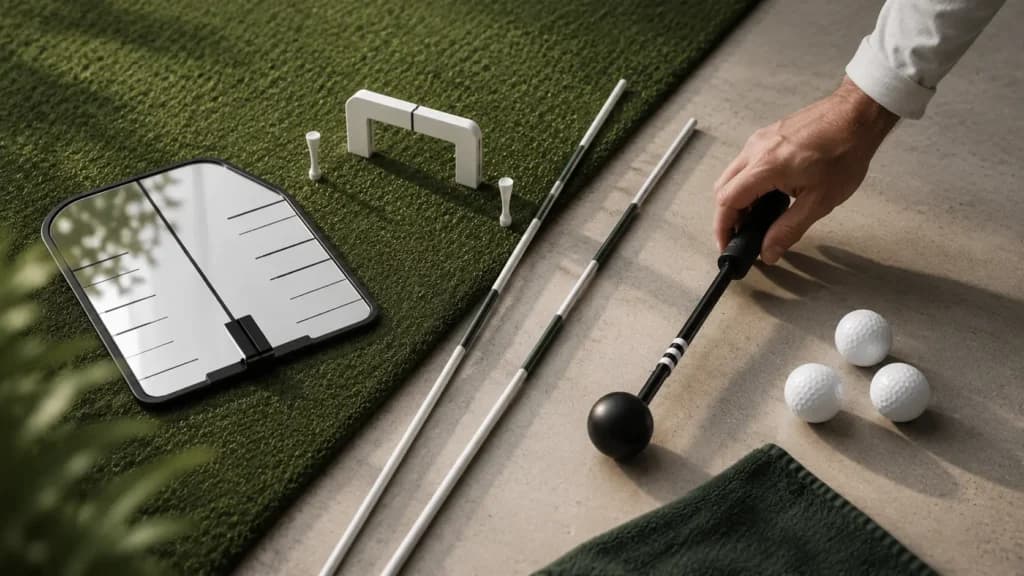
That is why training aids are especially useful at home. They create structure when you do not have a range, coach, or course in front of you.
Drill 1: Putting Mirror Setup Check
A putting mirror is one of the best tools for home practice because it helps you train setup consistency.
Place the mirror on a flat surface. Set the ball in the proper position and take your putting stance.
Check three things:
First, are your eyes positioned consistently over or just inside the ball?
Second, are your shoulders square to your target line?
Third, is the putter face aimed where you think it is aimed?
Make five to ten slow strokes while holding your finish. The goal is not to make a long putt. The goal is to repeat the same setup and stroke pattern.
This drill is especially useful because many putting problems begin before the stroke starts.
Drill 2: Start Line Gate Drill
Once your setup is consistent, work on start line.
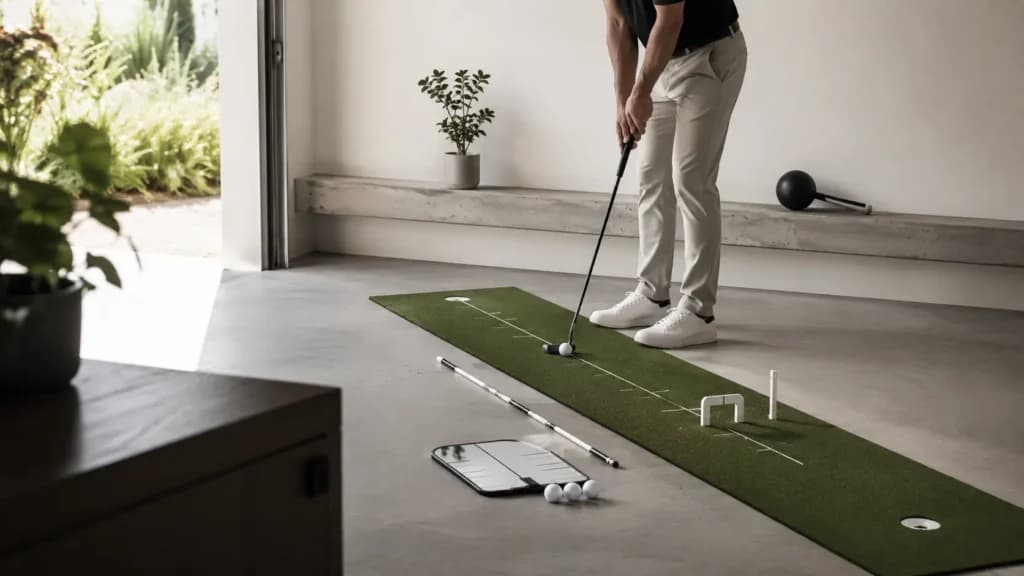
Place a small gate a few inches in front of the ball. You can use a putting gate, two tees, two coins, or two small household objects.
Hit putts through the gate.
If the ball rolls cleanly through, your face angle and start line are working. If the ball hits the gate, your putter face may be open or closed at impact.
This is one of the simplest ways to make putting practice measurable at home.
Start with short putts. As you improve, make the gate narrower or move it slightly farther from the ball.
Drill 3: Alignment Stick Setup Rehearsal
You do not need to hit balls to practice alignment.
Place an alignment stick on the ground to represent your target line. Place a second stick parallel to it where your feet would go.
Take your golf posture and rehearse your setup.
Check your feet, hips, shoulders, and clubface. Many golfers think they are aligned correctly but are actually aimed well left or right.
This drill helps you build awareness.
You can also add a ball position checkpoint. For example, place the ball slightly forward of center for a mid-iron, farther forward for a driver, and more centered for wedges.
The goal is to make your setup feel familiar before you ever take the club back.
Drill 4: Slow-Motion Takeaway Drill
The takeaway sets up the rest of the swing.
At home, you can practice it slowly without worrying about where the ball goes.
Take your normal setup. Begin the backswing slowly and stop when the club reaches waist height.
Check whether the clubface is wildly open or closed. Check whether the club is being pulled too far inside. Check whether your hands, arms, shoulders, and torso are moving together.
This drill works best when you use a mirror, window reflection, or phone camera.
The goal is not perfection. The goal is awareness and repeatability.
Do five slow rehearsals, reset, and repeat.
Drill 5: Tempo Swings
A tempo trainer can help you smooth out the transition from backswing to downswing.
Many amateur golfers rush from the top. That creates tension, poor sequencing, and inconsistent contact.
With a tempo trainer, make smooth swings where the club loads naturally. Focus on balance and rhythm.
A useful checkpoint is whether you can hold your finish. If you cannot hold your finish, you may be swinging too hard or losing sequence.
You can also do this drill without a ball. The goal is to train the motion, not chase the result.
Drill 6: Impact Position Rehearsal
Impact is where the swing matters most.
Using an impact bag or contact trainer, make slow rehearsals into the bag. Focus on arriving with your hands slightly ahead, your body rotating, and the clubface stable.
Do not slam the bag. This is not a strength drill.
Instead, use it to feel the difference between a weak impact position and a stronger one.
Beginners often flip the clubhead early because they are trying to help the ball into the air. Impact practice can help replace that habit with a more solid strike pattern.
Drill 7: Chipping Contact Drill
If you have a safe space, a mat, and foam or practice balls, you can work on chipping contact at home.
Set up with a narrow stance, weight slightly forward, and hands slightly ahead of the ball.
Make small swings and focus on brushing the ground in the same place each time.
You can use a towel behind the ball as feedback. If you hit the towel before the ball, your low point is too far back.
This drill helps improve contact without needing a full short-game area.
Keep the swings small and controlled.
A Simple 20-Minute Home Golf Practice Routine
Here is a simple practice session you can do at home:
5 minutes: Putting setup
Use a putting mirror to check eyes, shoulders, and putter face.
5 minutes: Start line
Roll putts through a gate from short distance.
5 minutes: Swing setup and takeaway
Use alignment sticks and slow-motion rehearsals.
5 minutes: Tempo or impact
Use a tempo trainer or impact bag to reinforce better movement.
This routine is short enough to do consistently. That matters more than one long practice session every few weeks.
How Often Should You Practice Golf at Home?
For most golfers, ten to twenty minutes a few times per week is enough to make progress.
The goal is not to exhaust yourself. The goal is to keep the right movements fresh.
Short, focused practice is better than long, distracted practice.
If you only have five minutes, practice putting setup or start line. If you have ten minutes, add tempo swings. If you have twenty minutes, work through a full routine.
Final Thoughts
Practicing golf at home works best when you stop trying to recreate the driving range.
Instead, use home practice to build the habits that show up later on the course.
Better setup. Better alignment. Better tempo. Better putting stroke. Cleaner contact.
You do not need a perfect practice space. You need a focused plan and a few tools that give you feedback.
That is how home practice turns into better golf.