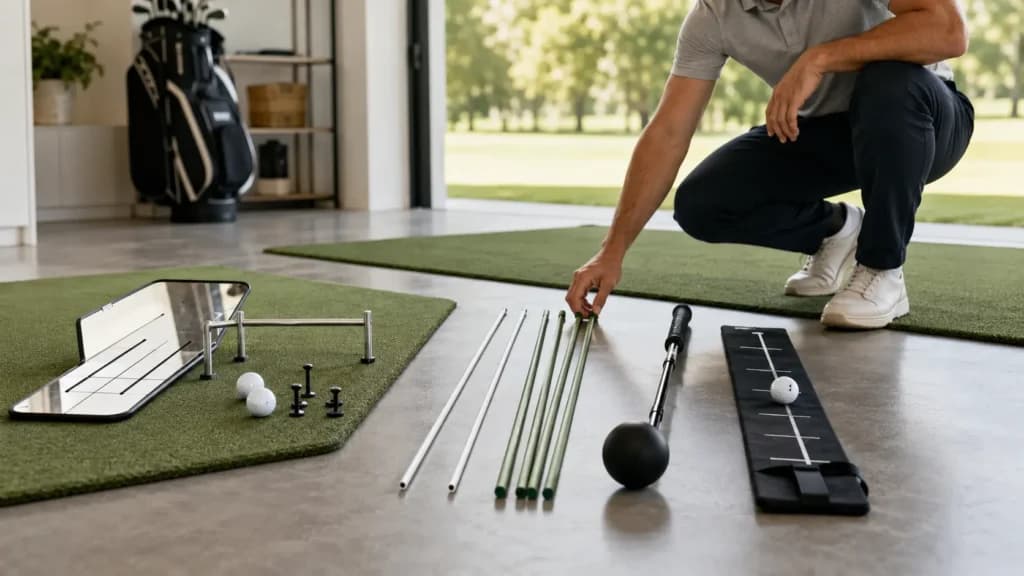
Guides
Published May 23, 2026How to Choose Golf Training Aids That Actually Help
Start with the issue in your game, then choose the training aid that gives you the clearest feedback for that issue.
Alignment
Not sure you’re aimed where you think you are? Give yourself a clear target line and setup reference.
Diagnose the setup
Alignment is not one line. The clubface relates to the target, while feet, knees, hips, and shoulders can each sit differently around that line. Ball position can also change how the setup looks and how the club arrives.
Directional ball flight can reflect face angle, swing path, strike, or a combination, so a setup reference is a diagnostic aid rather than a complete swing diagnosis. Use it to remove uncertainty about the starting position before drawing conclusions about the motion.
These patterns suggest that a consistent setup reference may be useful, but they do not identify a swing fault by themselves.
A practical framework
Treat alignment as a process you can observe. A useful routine separates the reference you set, the feedback you read, the repetitions you make, and the swing you eventually take without the reference.
Choose the target first. Identify the ball-to-target line before arranging your feet, hips, or shoulders around it.
Compare the clubface, ball position, and body lines with the reference. Record what changed instead of guessing from the shot alone.
Repeat the same setup at one target until the check becomes predictable. Change one variable at a time when you investigate a pattern.
Remove the reference for some shots, keep the same pre-shot sequence, then check again. The goal is to carry the routine onto the course, not depend on a marker forever.
Practice methods
These methods create a visible reference without pretending that every directional miss comes from alignment.
Pick a small target and establish the ball-to-target line before you step into the shot. Use an intermediate spot only if it makes that line easier to repeat.
Place a club or practice marker safely outside the swing area as a parallel reference. Compare one setup checkpoint at a time rather than trying to match every body line.
Alternate rehearsals with and without the reference. Note whether your setup routine survives when the visual guide is removed.
Tool categories
Choose a category by the information it provides. A household or on-course reference can sometimes serve the same job; a product is useful only when it makes the check clearer or easier to repeat.
Straight references can show a target line, a parallel body line, or ball position. Keep any object outside the club's path and use only the reference needed for the drill.
Position markers help you return the ball and feet to the same place. They are most useful when the chosen positions are intentional and recorded.
A phone camera or simple target marker can capture a setup from the same angle. Consistent framing matters more than adding more equipment.
Tool categories
This improvement goal does not yet have a dedicated published collection. Browse the current shop or use the practice guidance while the product relationship is developed.
Browse all toolsRead before you buy
Use the existing guides to choose feedback that fits the problem, keep a first practice setup simple, and adapt alignment work for home practice.
Guides
Published May 23, 2026Start with the issue in your game, then choose the training aid that gives you the clearest feedback for that issue.
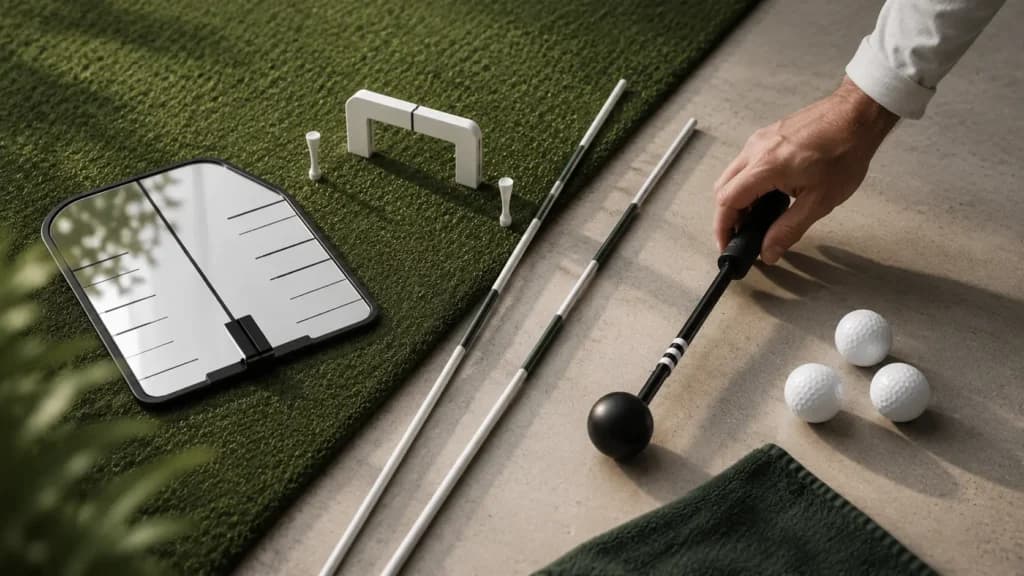
Guides
Published May 23, 2026The best beginner golf training aids make practice simpler by giving you feedback you can feel, see, or repeat.
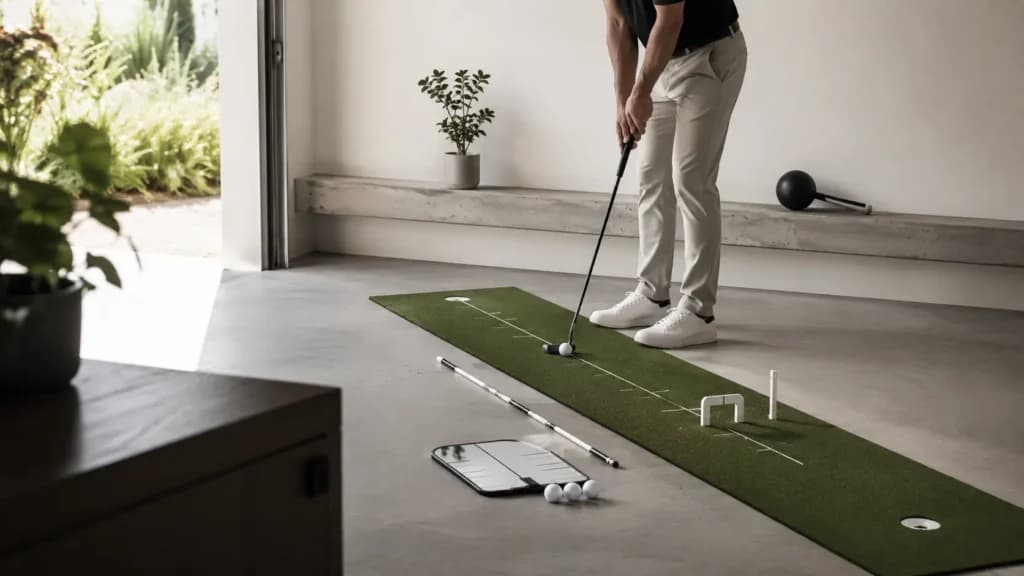
Drills
Published May 23, 2026Build better habits between rounds with focused drills for putting, alignment, tempo, impact, and chipping contact.
Related goals
Alignment work overlaps naturally with putting setup and limited-space rehearsals. Follow the next problem that best matches your practice.
Practice tips
Email signup is not active yet. Contact details and an email marketing provider are required before subscriptions can be collected.
© 2026 Darts Not Divots. All rights reserved.